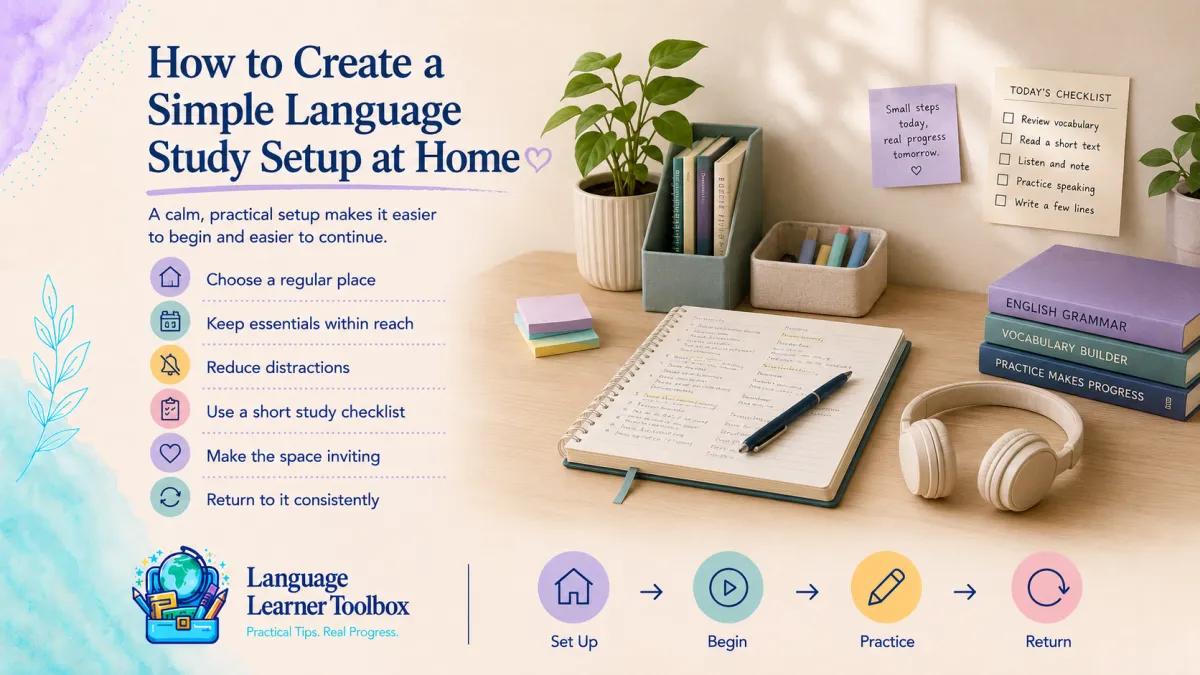
How to Create a Simple Language Study Setup at Home
A useful language study space does not need to be large, expensive, or perfectly decorated.
You do not need a separate office, matching furniture, or shelves filled with supplies.
You need a place that makes it easier to begin.
A good study setup reduces small obstacles. Your materials are easy to find. Your next task is visible. You have enough light, a comfortable place to sit, and fewer distractions competing for your attention.
The goal is not to create a beautiful room you rarely use.
The goal is to create a simple environment that supports regular practice.
Begin With the Space You Already Have
Look around your home before buying anything.
You may already have a useful study location:
one end of a dining table
a small desk
a comfortable chair beside a side table
a kitchen counter during a quiet part of the day
a corner of a bedroom
a portable basket you can carry to different rooms
a shelf near your usual reading chair
a folding table that can be put away
The space does not need to belong only to language learning.
It needs to be available often enough that you can use it without creating a complicated setup each time.
Ask:
Where could I sit for ten or twenty focused minutes without too much preparation?
Start there.
Choose a Place That Fits the Kind of Practice You Do
Different activities need different conditions.
For writing or workbook practice
You may need:
a firm surface
a comfortable chair
good lighting
enough room for a book and notebook
For listening
You may need:
headphones
a charged device
a quiet corner
easy access to transcripts or notes
For speaking practice
You may need:
privacy
enough quiet to record yourself
a stable internet connection
a place where you feel comfortable speaking aloud
For tutor or conversation partner sessions
You may need:
a reliable chair and table
a device stand
good lighting
headphones or a microphone
your notes within reach
a background that does not feel distracting
Your main study location should support the kind of practice you do most often.
Keep the Setup Small
A simple setup is easier to maintain.
Your active study area may need only:
one main workbook
one notebook
a pen
headphones
a device
a small folder
a weekly study plan
Do not place every resource you own in the study space.
Too many materials can make it harder to decide where to begin.
Keep only what you are actively using nearby.
Store the rest elsewhere.
Give Your Materials a Home
Every active item should have a predictable place.
You might use:
one basket
one tray
one drawer
one shelf
one tote bag
one desktop file holder
A portable basket can be especially useful if you do not have a permanent desk.
It might contain:
current workbook
vocabulary notebook
headphones
pens
flashcards
tutor notes
weekly plan
When it is time to study, you carry the basket to your chosen spot and begin.
When you finish, everything returns to the same place.
Keep the Current Resource Visible
A resource that is hidden is easy to forget.
Leave your current workbook, notebook, or study plan somewhere you will see it.
You might:
place it on your desk
leave it in an open basket
set it beside your planner
keep it next to your headphones
bookmark the next page
leave a note on top with the next task
The goal is to reduce the distance between remembering your plan and beginning it.
Make the Next Step Obvious
Your study space should tell you what to do next.
At the end of a session, leave a simple note:
Complete page 18.
Review the five travel phrases.
Listen to the clip again without captions.
Prepare three questions for Saturday.
Practice the second speaking prompt.
Ask the tutor about past tense.
This prevents you from sitting down later and spending the first ten minutes deciding.
A visible next step makes starting easier.
Use Good Lighting
Poor lighting can make reading and writing tiring.
Choose a place with:
natural light when available
a nearby lamp
light directed toward the page
limited glare on screens
You do not need special equipment.
You need enough light to work comfortably without straining.
If you study at different times of day, check whether the space still works in the evening.
Choose a Comfortable Position
Your study setup should support attention without making you uncomfortable.
Check:
chair height
table height
screen position
back support
room for your arms
whether your neck bends too far
whether your feet feel stable
You do not need a perfect ergonomic office.
Small adjustments can help:
place the device on a stand
use a firm cushion
move the chair closer
raise the screen with a sturdy book
keep the notebook directly in front of you
Comfort matters because discomfort becomes another reason to stop.
Reduce Visual Clutter
A busy space can make it difficult to focus.
Before studying, clear enough room for the task.
You do not need to clean the entire room.
You may only need to:
move unrelated papers
put away dishes
clear one section of the table
close extra browser tabs
place your phone out of reach
remove materials for other projects
Create one small area that feels ready.
Control Digital Distractions
A study space includes your digital environment.
Before beginning:
close unrelated tabs
silence unnecessary notifications
place the phone face down
use full-screen mode
open only the resource you need
set a short timer
keep social media closed
You do not need perfect discipline.
You need fewer opportunities to drift away from the task.
Prepare Your Technology in Advance
Technology problems can interrupt a short study session.
Keep basic items ready:
charged headphones
device charger
reliable internet connection
tutor or meeting link
saved podcast or video
downloaded files
microphone settings
bookmarked dictionary
accessible notes
Before an online session, test the sound and camera briefly.
A few minutes of preparation can protect the time you planned to use.
Use Headphones With a Clear Purpose
Headphones can help with:
listening details
pronunciation
online lessons
voice recording
reducing background noise
Keep them in the study area so you do not have to search for them.
If you live with other people, headphones can also signal that you are in a short focused session.
Create a Speaking-Friendly Space
Many learners avoid speaking practice at home because they feel self-conscious.
Try to find a place where you can speak aloud without worrying too much about being overheard.
Possible options include:
a bedroom with the door closed
a parked car
a quiet basement
a walk outside with headphones
an empty room
a scheduled time when others are away
a corner where soft furnishings reduce sound
You do not need complete silence.
You need enough comfort to answer questions, repeat phrases, and record yourself.
Keep a Small Supply of Useful Materials
You may want:
pens
pencils
sticky notes
index cards
highlighters
paper clips
a small timer
Keep only what you actually use.
Too many supplies can turn the study setup into another organization project.
The materials should support practice, not become the focus.
Avoid Making the Space Too Precious
A beautiful setup can be motivating.
But the space should still feel usable.
Do not make it so carefully arranged that you hesitate to:
write in the workbook
leave notes
cross things out
move materials
make mistakes
use the table for real work
A study space should show evidence of learning.
It does not need to remain picture-perfect.
Add One Helpful Visual Cue
A visual reminder can support consistency.
You might display:
your current goal
a short weekly plan
a progress tracker
one encouraging phrase
the next conversation topic
a list of useful sentence starters
a calendar with practice days
Keep it simple.
One clear cue is more useful than a wall full of information you stop noticing.
Make the Space Inviting
Your study area does not need to be decorative, but it should feel pleasant enough that you are willing to return.
You might add:
a small plant
a favorite pen
a simple lamp
an uncluttered notebook
a comfortable cushion
one meaningful photo
a small container for supplies
Choose items that make the space feel calm and ready.
Avoid adding so much that the setup becomes visually busy.
Keep Food and Drinks Separate When Helpful
Some learners enjoy studying with a snack or drink.
Others become distracted by preparation, cleanup, or spills.
Decide what helps you.
If food regularly interrupts the session, eat first.
If a drink helps you settle in, keep it in a safe place away from devices and workbooks.
The study setup should support the practice, not create another routine that takes longer than the study itself.
Create a Portable Version
You may not always study in the same location.
A portable setup can include:
one notebook
one pen
headphones
a small workbook
a downloaded audio lesson
a phone or tablet
a short list of current goals
Keep these items in one bag or pouch.
This lets you practice:
at a library
during a lunch break
in a waiting room
while traveling
at a family member’s home
in a quiet outdoor space
A portable setup gives you flexibility without requiring you to rebuild the system every time.
Create a Five-Minute Setup
Your study space should support very short practice too.
For a five-minute session, you might keep ready:
one vocabulary page
one speaking question
one short audio clip
one workbook activity
one set of flashcards
You should be able to sit down and begin without opening several folders or searching for a link.
Create a Longer-Session Setup
For a thirty- or sixty-minute session, prepare:
the main resource
a clear goal
headphones
notes
water if needed
a timer
the next activity
a place to record questions
The setup should support deeper work without requiring constant movement.
Match the Setup to Your Routine
A study space works best when connected to a regular time.
For example:
after breakfast at the kitchen table
after work at a small desk
before bed in a reading chair
during lunch at the office
Saturday morning in the dining room
before a tutor session in the same chair each week
The repeated time and place become a cue.
Eventually, sitting there can help your brain recognize:
This is where I practice my language.
Let the Space Support More Than One Skill
A simple setup can support a complete learning cycle.
For example:
Prepare
Review vocabulary or questions.
Practice
Complete a workbook activity.
Listen
Use headphones for a short clip.
Speak
Answer a question aloud.
Reflect
Write one sentence about what improved.
You do not need separate spaces for each skill.
You need materials that make changing activities easy.
Include a Place for Questions
Keep a small section in your notebook or study area for questions.
You might label it:
Ask My Tutor
Check Later
Still Confusing
Useful Questions
When something interrupts your practice, write it down instead of stopping to investigate every detail immediately.
You can return later with a dictionary, tutor, teacher, or other reference.
Keep Current Vocabulary Nearby
If vocabulary is part of your goal, keep a small active list visible.
This might include:
five phrases for the week
one set of conversation vocabulary
recent tutor corrections
sentence starters
words you want to use in speaking
Do not display dozens of words.
Choose a small set you can realistically review and use.
Prepare for Online Tutoring
Before an online tutoring session, have ready:
lesson link
notebook
previous notes
questions
current goal
headphones
charged device
any workbook pages
a glass of water if useful
Position the camera and light so you can focus on the conversation rather than technical problems.
After the session, leave the notes in the same place for review.
Prepare for Conversation Partner Meetings
Keep a small meeting folder or notebook with:
chosen topic
prepared questions
useful vocabulary
partner notes
correction preferences
next meeting date
This helps each meeting begin with purpose.
It also keeps the partnership from becoming a series of unrelated conversations.
Use a Weekly Reset
Spend five or ten minutes resetting the space.
You might:
clear completed pages
return supplies
charge devices
replace the weekly vocabulary
choose the next workbook lesson
save the next audio clip
review tutor notes
write the next step
A short reset keeps the space ready.
Do Not Let the Setup Become the Project
It is easy to spend too much time:
shopping for supplies
rearranging furniture
designing trackers
decorating notebooks
comparing lamps
creating elaborate labels
reorganizing folders
Before changing the space, ask:
What learning problem will this solve?
If the answer is unclear, use the setup you already have and begin practicing.
Notice What Creates Friction
Pay attention to the small things that repeatedly interrupt you.
For example:
headphones are always missing
the chair is uncomfortable
the table is covered
the workbook is stored too far away
the device is not charged
you cannot remember the next task
family members interrupt the time
the lighting is poor
internet connection is unreliable
Fix one recurring problem at a time.
A small improvement can make the setup much more useful.
Adjust for Other People in the Home
If you share your home, communicate your study plans.
You might say:
I am going to practice for twenty minutes. I will be available after that.
You can also use:
headphones
a closed door
a visible timer
a regular study time
a simple signal that you are practicing
a location away from the busiest area
Your system should respect the household while protecting a small amount of focused time.
Use the Space Even When Motivation Is Low
A good setup reduces the number of decisions needed on difficult days.
When motivation is low:
Sit in the study place.
Open the prepared resource.
Complete the smallest planned action.
Stop if necessary.
The setup helps you begin before you feel fully ready.
That is one of its most important jobs.
Know When the Setup Is Working
Your study setup is useful when:
you begin more quickly
materials are easy to find
you know what to do next
you practice more regularly
distractions are reduced
speaking aloud feels possible
online sessions run smoothly
short practice feels manageable
resetting the space is easy
It does not need to look impressive.
It needs to support action.
A Simple Home Study Setup
A basic setup may include:
One place to sit
A desk, table, or comfortable chair.
One container
A basket, tray, drawer, or study bag.
One main resource
The workbook, course, or guide you are currently using.
One notebook
For vocabulary, questions, corrections, and reflection.
One listening tool
Headphones and a saved audio source.
One visible next step
A note showing what to do when you return.
That is enough to begin.
Try This Today
Set a timer for fifteen minutes.
Then:
Choose one place in your home.
Clear enough space for one activity.
Gather your current workbook or learning resource.
Add a notebook, pen, and headphones.
Write down your next practice step.
Remove one obvious distraction.
Complete five minutes of language practice.
Do not wait until the setup feels finished.
Let the setup improve through use.
Remember This
Your study space does not need to be perfect.
It needs to make starting easier.
A simple chair, a small surface, the right materials, and a visible next step can be enough to support steady progress.
Ready for Your Next Step?
The Learning Tools & Resources page brings together practical guides, workbooks, and downloadable support to help you build a learning system that fits your goals and everyday life.
If you want to turn your new study setup into a consistent routine, the 21-Day Language Habit Bootcamp offers one practical step each day to help you keep showing up.
The Language Learning Habit Stack Workbook can also help you connect language practice to habits already present in your day, making your study space part of a repeatable learning rhythm.

