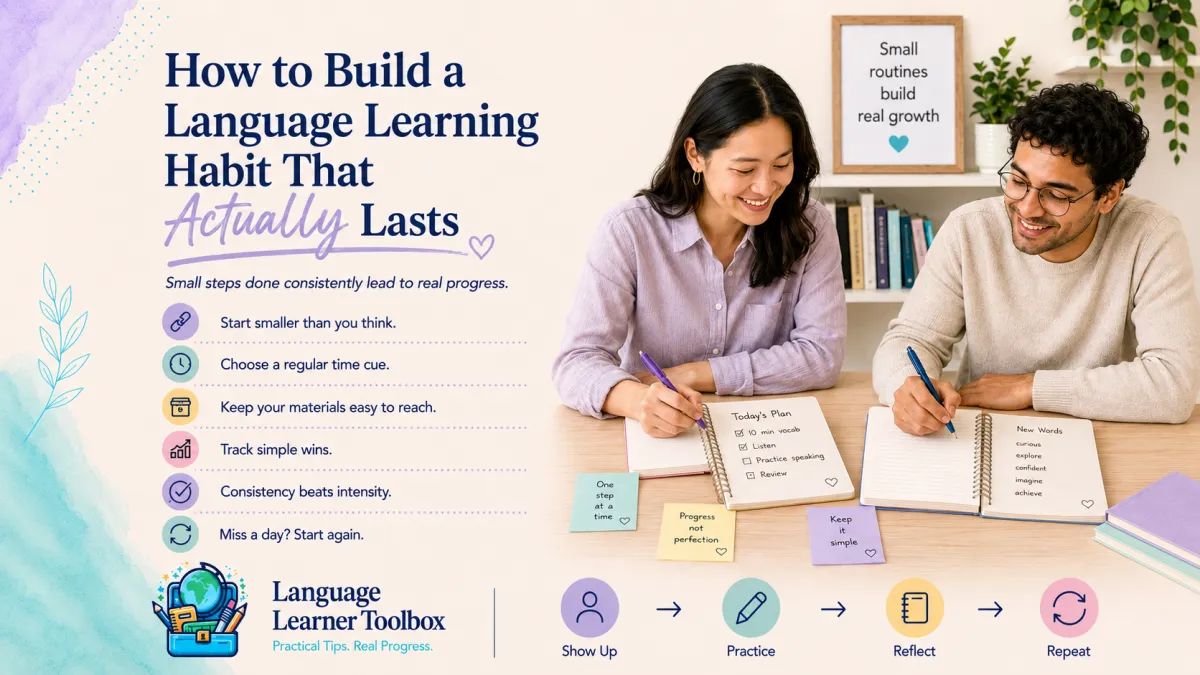
How to Build a Language Learning Habit That Actually Lasts
Many language learners believe success comes down to motivation.
They wait until they "feel like studying."
They make ambitious plans.
They promise themselves they'll practice every day for an hour.
Then real life happens.
Work gets busy.
Family needs attention.
Energy disappears.
And suddenly it feels like they've failed again.
The problem usually isn't motivation.
It's trying to build a habit that doesn't fit real life.
The good news is that lasting language habits aren't built through heroic effort.
They're built through small, repeatable actions that become part of your everyday routine.
1. Start smaller than you think
One of the biggest mistakes learners make is trying to do too much too soon.
Instead of planning an hour every day, begin with something you know you can accomplish.
Five minutes.
One page.
One conversation prompt.
One short podcast.
Small habits are easier to repeat.
And repeated actions are what build lasting progress.
2. Connect practice to an existing routine
The easiest habits don't rely on memory.
They rely on routines that already exist.
Try attaching language practice to something you already do every day.
For example:
review vocabulary after breakfast
listen during your commute
read one paragraph before bed
answer one conversation prompt after dinner
When practice has a natural place in your day, it stops feeling like another item on your to-do list.
3. Make starting almost effortless
Often, the hardest part isn't practicing.
It's getting started.
Make your materials easy to reach.
Leave your workbook on the table.
Keep your notebook open.
Download tomorrow's podcast today.
Have one activity that's always ready.
The fewer decisions you have to make, the easier it becomes to begin.
4. Plan for busy days before they happen
Successful learners don't expect every day to be productive.
They expect real life.
Instead of skipping practice completely, decide what your "minimum practice" looks like.
Maybe it's:
reviewing three vocabulary words
listening for two minutes
saying one sentence out loud
answering one conversation question
Small practice keeps the habit alive.
And keeping the habit alive matters more than having a perfect study session.
5. Measure consistency, not perfection
Many learners overlook the progress they're making because they're only measuring big accomplishments.
Instead, celebrate showing up.
A simple checklist.
A calendar.
A notebook.
A habit tracker.
Every check mark is evidence that you're becoming the kind of person who practices consistently.
Those small wins matter.
6. Let your tools work for you
Good learning tools remove confusion.
They help you know exactly what to do next.
That might include:
a simple habit tracker
a favorite podcast
vocabulary cards
your conversation notebook
The Language Learner's Workbook for structured speaking practice
The goal isn't to collect more resources.
The goal is to build a simple system you'll actually use.
7. Build the habit before chasing perfection
Fluent speakers weren't perfect on Day One.
They became fluent because they kept coming back.
One conversation.
One listening session.
One page.
One phrase.
Progress isn't built by having the perfect plan.
It's built by returning tomorrow.
Small habits create confident speakers
Language learning doesn't have to become another project you start over every January.
It can become part of your everyday life.
Five minutes becomes ten.
Simple conversations become comfortable conversations.
Small daily practice becomes real confidence.
That's how lasting language growth happens.
Not through perfection.
Through consistency.
Try This
Choose one language activity you can complete in five minutes.
Connect it to a routine already in your day.
Decide what your minimum practice will be on busy days.
Remember This
Great language habits are not built through perfect days.
Small, repeatable actions are easier to continue.
Consistency will take you farther than intensity.
Progress grows when you keep returning.
Continue Reading
Make practice part of a routine you already have
[Habit Stacking for Language Learners]
Keep moving forward when life gets busy
[How to Stay Consistent Even on Busy Days]
Create a routine that works in real life
[How to Build a Language Routine That Fits Your Life]
Ready for your next step?
If you're ready to build a language habit that fits real life, the free 21-Day Language Habit Bootcamp is a great place to begin.
And when you're ready to move beyond habits into meaningful conversation practice,The Language Learner's Workbook: A Guide for Conversation Practice gives you a clear path for building confidence one conversation at a time.

