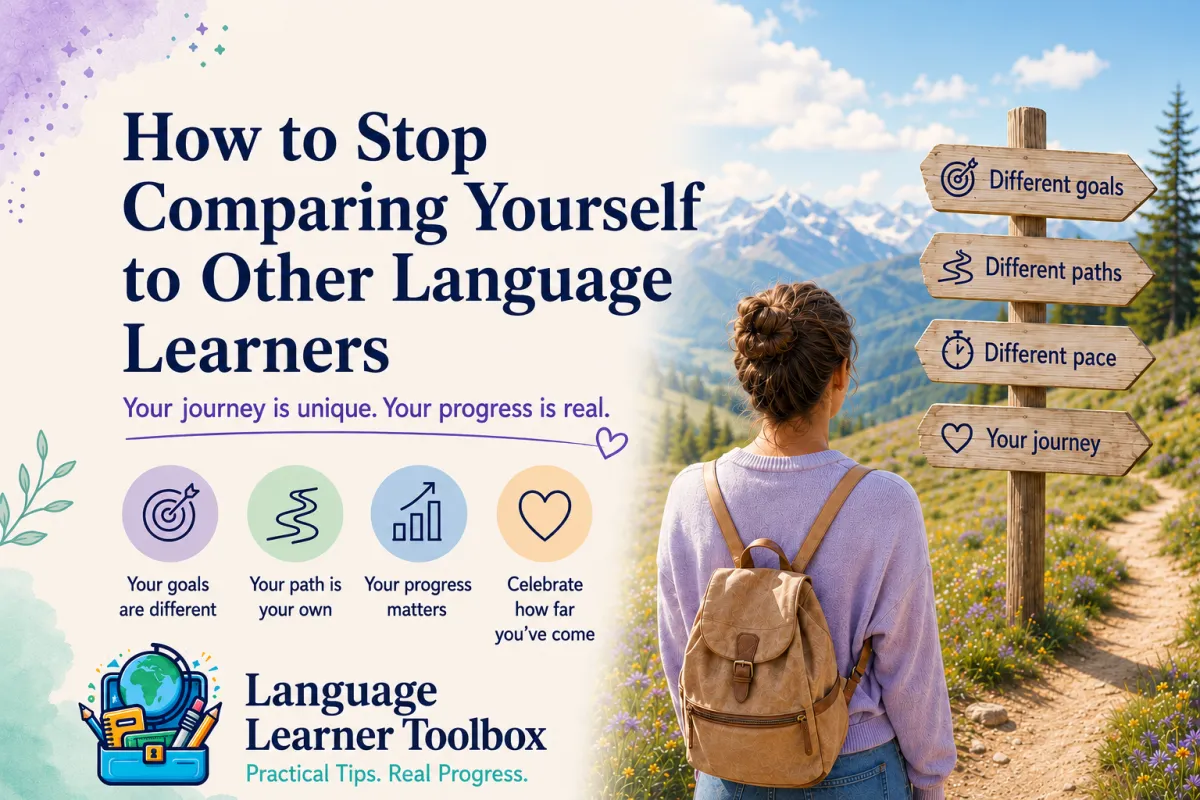
How to Stop Comparing Yourself to Other Language Learners
One of the quickest ways to lose confidence in a language is to compare yourself with someone else's progress.
Maybe another learner speaks more fluently.
Maybe they understand conversations more easily.
Maybe they seem fearless while you still feel nervous every time you open your mouth.
It's natural to notice those differences.
But comparisons rarely tell the whole story.
Every language learner begins from a different place, has different opportunities, and is working toward different goals.
The most meaningful comparison isn't between you and another learner.
It's between who you are today and who you were yesterday.
If you've ever felt like you understand more than you can say, you're not alone. Many learners experience that gap long before they begin speaking confidently.
Everyone's starting point is different
Some learners grew up hearing the language at home.
Some studied it in school for years.
Some moved to a country where they hear it every day.
Others are learning through short study sessions after work or between caring for a family.
Those experiences matter.
Two learners may appear to be on the same lesson, but they may have traveled very different paths to get there.
Everyone has different goals
Not every language learner is trying to become a native speaker.
Some people want to travel confidently.
Some want to succeed at work.
Some want to build friendships.
Some want to read books.
Some simply enjoy understanding another culture.
Your goal determines what success looks like.
One learner may celebrate giving a presentation.
Another may celebrate ordering dinner without help.
Both are real accomplishments.
Celebrate the progress you don't always notice
Language growth often happens quietly.
One day you suddenly realize you understood a joke.
Or you answered a question without translating first.
Or you followed a conversation that would have felt impossible six months earlier.
Those moments matter.
Many of them are built on mistakes that helped you learn faster even when they felt frustrating at the time.
Progress doesn't always announce itself.
Sometimes it quietly becomes part of who you are.
Don't rush someone else's journey
Language learning isn't a race.
Moving faster doesn't always mean learning better.
Some learners enjoy taking their time.
Some explore grammar deeply.
Some love conversation.
Some focus on reading.
Your journey should fit your goals, your interests, and your life.
Be inspired, not discouraged
Instead of comparing yourself to stronger speakers, become curious about them.
Ask what helped them improve.
Notice the habits they've developed.
Learn from their experience without using it as evidence that you aren't doing enough.
Comparison often steals motivation.
Curiosity builds it.
Sometimes the best way to learn is simply to ask better questions and become a better conversation partner.
Remember why you started
When progress feels slow, return to your reason for learning.
Perhaps you want to communicate with neighbors.
Perhaps you hope to travel.
Perhaps you want to help your children.
Perhaps you simply enjoy learning.
That purpose is more important than someone else's timeline.
Appreciate what you've already accomplished
Learning another language takes courage.
It takes patience.
It takes persistence.
Every conversation, every mistake, every new word, and every small success represents a decision to keep growing.
Whether you're holding simple conversations or discussing complex ideas, you've stepped beyond the language you were born into.
That is something to be proud of.
Speaking more than one language is a remarkable accomplishment. It represents hundreds of choices to stay curious, keep learning, and continue reaching beyond what once felt comfortable.
Take a moment to appreciate how far you've already come.
Remember This
Every language learner has a different story.
Different goals.
Different opportunities.
Different strengths.
Don't measure your progress against someone else's path.
Measure it against the person you were yesterday.
Ready for Your Next Step?
The Language Learner's Workbook: A Guide for Conversation Practice gives you meaningful opportunities to keep growing at your own pace through real conversations and guided reflection.
If you're looking for steady encouragement, the 21-Day Language Habit Bootcamp will help you build the consistent habits that turn small improvements into lasting confidence.

