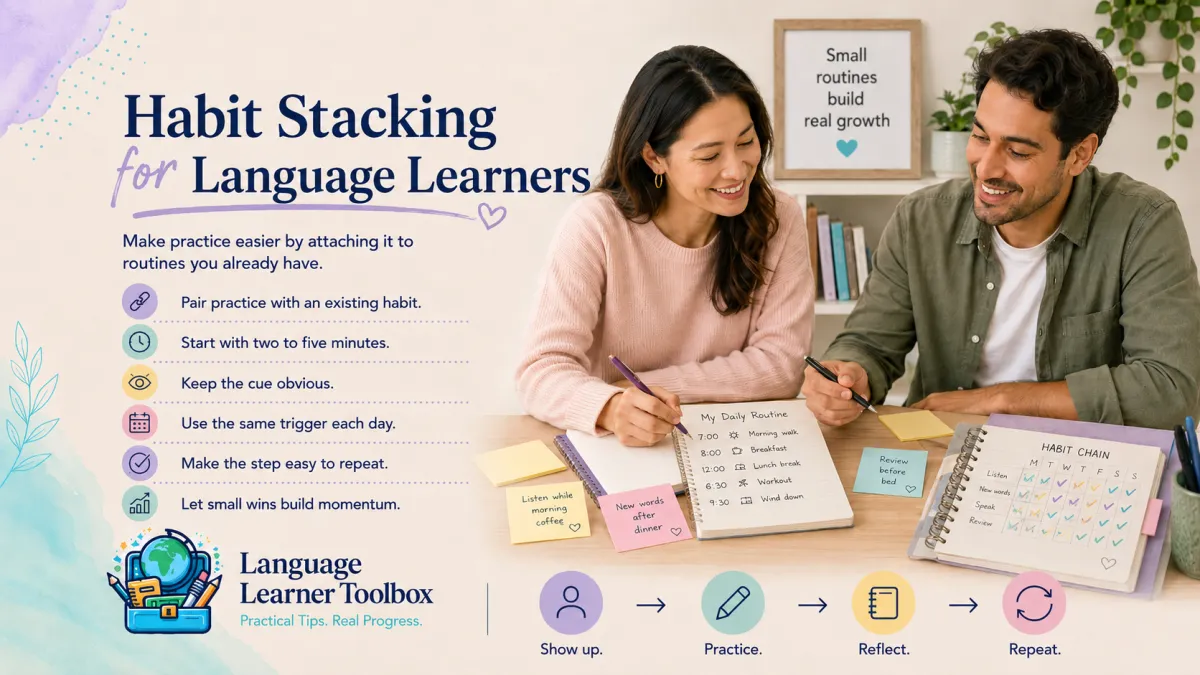
Habit Stacking for Language Learners
Make practice easier by connecting it to routines you already have.
Many language learners want to practice consistently.
They make a plan.
They choose a study time.
They promise themselves they will remember.
Then the day gets busy.
Work takes longer than expected.
Someone needs help.
Energy disappears.
And language practice gets pushed to tomorrow.
The problem may not be motivation.
It may be that practice does not have a natural place in the day.
Habit stacking gives it one.
Instead of creating an entirely new routine, you connect language practice to something you already do.
The pattern is simple: After I __________, I will __________.
For example:
After I eat breakfast, I will review five vocabulary words.
After I start my walk, I will listen to a short podcast.
After I sit down for lunch, I will read one paragraph.
After I brush my teeth, I will say three sentences about my day.
The first habit becomes the reminder for the second.
You do not have to find more time.
You give a small amount of practice a dependable place in the life you already have.
1. Start With a Routine That Already Happens
A habit stack works best when the first action is already familiar.
Choose something you do regularly without needing much thought.
It might be:
eating breakfast
driving to work
opening your computer
taking a lunch break
walking the dog
cleaning the kitchen
getting ready for bed
Then add one small language activity.
For example:
After I open my computer, I will review yesterday’s notes.
After I put on my walking shoes, I will begin my listening playlist.
After I finish dinner, I will answer one conversation question.
The routine you already have becomes the cue.
You are not building a whole new schedule.
You are adding one small step to a path that already exists.
That is one reason habit stacking can help you build a language learning habit that actually lasts.
2. Keep the Practice Small
Many learners make new habits too difficult.
They decide to study for an hour every night.
Learn twenty new words every day.
Complete a full lesson before work.
The plan sounds productive.
But real life eventually gets in the way.
A habit is easier to build when the first step feels manageable.
Try:
five vocabulary words
one short listening clip
one paragraph
three sentences aloud
one conversation question
one useful phrase
Small practice still counts.
In fact, you may be surprised by what counts as language practice when you stop measuring progress only by long study sessions.
Your first goal is not to do as much as possible.
Your first goal is to make the habit easy to repeat.
3. Make the Connection Obvious
The existing routine is your main reminder.
A visible cue can make the habit stack even stronger.
Put the materials where the practice will happen.
Leave vocabulary cards near the breakfast table.
Keep your notebook beside your computer.
Save your listening playlist where it is easy to open.
Place a conversation question inside your planner.
You might even leave yourself a simple note:
Walk = Listen
Lunch = Vocabulary
Bedtime = Three Sentences
Make beginning easy.
Open the book to the next page.
Choose the podcast ahead of time.
Write tomorrow’s speaking question before you close your notebook.
The fewer decisions you have to make, the easier it is to begin.
Knowing what to practice each day can remove one more reason to put it off.
4. Use the Same Cue Regularly
Habit stacking becomes more useful when the connection stays consistent.
If vocabulary happens after breakfast one day, during lunch the next day, and before bed the day after that, you still have to remember a new plan each time.
Try keeping the cue the same.
After breakfast, review vocabulary.
During your walk, listen.
After dinner, practice speaking.
Before bed, write one sentence.
The exact time does not have to be perfect.
The connection matters more.
After a while, the first routine may begin reminding you of the second.
You put on your walking shoes and think about your podcast.
You sit down for lunch and remember your vocabulary cards.
You open your planner and remember to write a short reflection.
That connection is what makes the habit easier to continue.
5. Build a Habit for Real Life
The best habit is not always the most ambitious one.
It is the one you can return to.
Instead of:
After dinner, I will complete a thirty-minute grammar lesson.
Try:
After dinner, I will review one grammar example.
Instead of:
Before bed, I will write a full journal page.
Try:
Before bed, I will write one sentence about my day.
You can always do more when you have the time and energy.
The small action is the minimum, not the limit.
Some days, five minutes may turn into twenty.
Other days, five minutes may be all you have.
Both days count.
A flexible habit helps you build a language routine that fits your life instead of forcing your life to fit an unrealistic plan.
6. Let the Habit Grow
Small actions may not feel important at first.
But repeated actions add up.
Five minutes a day becomes more than two hours of practice in a month.
Three useful phrases a week become more than 150 phrases in a year.
One short conversation each week creates more than fifty opportunities to speak.
The habit also changes how you see yourself.
Each time you return, you gather evidence:
I can practice consistently.
Small amounts of time still matter.
I know how to begin.
I know how to return.
You may not notice the growth immediately.
That does not mean it is not happening.
Learning to recognize progress before you feel fluent can help you see what steady practice is already building.
The goal is not one perfect study session.
The goal is to keep coming back.
Try This
Choose one routine you already complete most days.
Add one language activity that takes two to five minutes.
Put the materials where you will see them when the routine begins.
Remember This
Habit stacking gives language practice a natural place in your day.
Start with a routine that already happens.
Keep the new activity small and easy to begin.
Use the same cue often enough for the connection to become familiar.
Small practice becomes powerful when you keep returning.
Continue Reading
How to Build a Language Learning Habit That Actually Lasts
How to Choose What to Practice Each Day
How to Build a Language Routine That Fits Your Life
Ready for Your Next Step?
Join the 21-Day Language Habit Bootcamp for simple daily guidance, or use the Language Learning Habit Stack Workbook to build and track a routine that works in real life.

